


How to Create a Vision Board for 2026 (That Actually Feels Right)
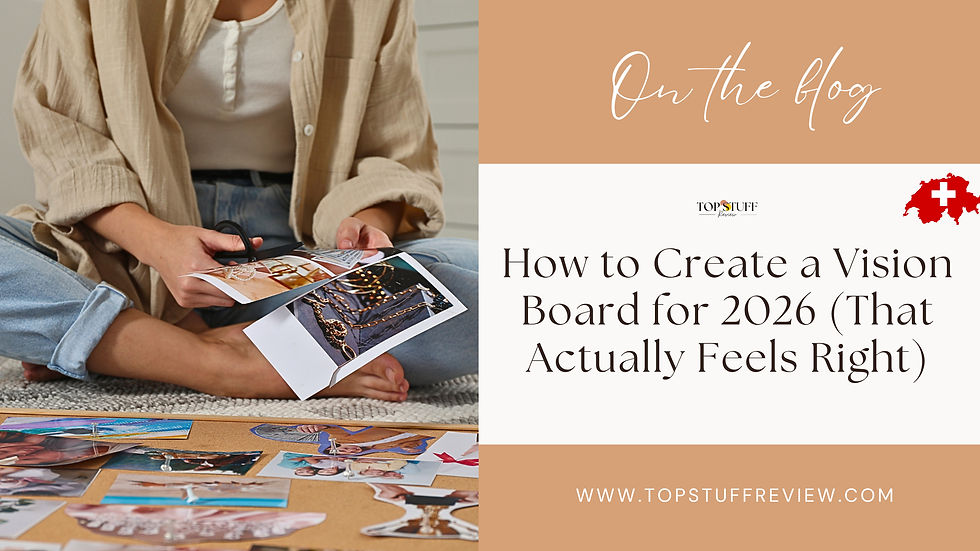
I’ve been creating a vision board every single year for a long time now.
Not because it’s trendy. Not because Pinterest says I should. But because I’ve felt the difference it makes.
There is something quietly powerful about seeing your intentions every day — not in your head, not buried in a notes app, but visually present in your life. Over time, I noticed a shift. Not overnight. Not dramatically. But steadily.
My mindset changed. My decisions became clearer. And slowly, one by one, I started checking things off — sometimes without even realizing I was working toward them.
That’s why I believe so strongly that vision boards aren’t about manifestation fantasies. They’re about orientation. They help you stay pointed in the right direction — especially when life gets busy, noisy, or uncertain.
As we move into 2026, vision boards are evolving. And honestly? For the better.
Why Vision Boards Hit Differently When You Do Them Every Year
When you create a vision board once, it’s inspiring.
When you create one every year, it becomes something else entirely.
You start noticing patterns:
goals that keep returning (because they truly matter)
things that quietly fall away
intentions that slowly become your reality
I’ve gone back and looked at old boards before — and that moment is always emotional. Not because everything came true exactly as planned, but because so much of it did, just not always in the way I expected.
That’s the shift people are craving in 2026:
less pressure
more trust
long-term alignment instead of short-term intensity
A vision board becomes less about “achieving” and more about living consciously.
Step 1: Start With Reflection (This Is Where the Magic Begins)
Before I create a new vision board, I always reflect on the previous one.
I ask myself:
What did I actually live this year?
What felt aligned?
What felt forced?
What surprised me?
There’s a unique feeling that comes from checking things off — not aggressively, but with gratitude. Some goals get a mental tick. Some get a quiet smile. Others simply dissolve because they no longer fit.
This reflection step is what makes vision boards powerful over time.
I usually write this down first — slowly — in a simple notebook or planner. Nothing fancy. Just a clean, distraction-free space to think. Neutral planners or journals from places like Manor or Jelmoli work perfectly for this because they don’t visually overwhelm the process.
This step grounds your 2026 vision board in real experience, not wishful thinking.
Step 2: Define How You Want 2026 to Feel
This is something I’ve learned from doing vision boards year after year:
Goals change. Feelings don’t.
Instead of writing:
“Earn more”
“Be healthier”
“Travel more”
I translate them into feelings:
stability
energy
freedom
confidence
ease
When you look at your vision board daily, you’re not chasing outcomes — you’re reinforcing emotions. And emotions guide behavior far more effectively than to-do lists.
This is where mindset shifts happen quietly.
Step 3: Digital vs Physical Vision Boards (What I’ve Learned Over Time)
I’ve done both. More than once.

Digital Vision Boards
These work beautifully if you:
want daily exposure
like seasonal updates
enjoy clean, minimalist visuals
I’ve found digital boards especially powerful because they’re always with you. Your phone, your laptop, your tablet — those moments add up.
Having a comfortable setup helps. A simple tablet stand or clean desk setup (from stores like Fust) turns the process into a ritual rather than a rushed task.
Physical Vision Boards
Physical boards slow you down — and sometimes that’s exactly what you need.
There’s something grounding about:
cutting images
rearranging them
physically placing intention into space
I don’t overcomplicate this. A cork board, scissors, glue, and a few magazines are enough. Neutral stationery from Manor or Ackermann keeps the focus on intention, not decoration.
Amazon works well if you want everything delivered in one go.
What matters isn’t the format. It’s consistency.
Step 4: The 2026 Vision Board Aesthetic (Why Calm Wins)
After years of doing this, one thing is clear to me: If your vision board overstimulates you, you won’t return to it.
The most effective boards I’ve created — and the ones trending hardest on Pinterest for 2026 — share these traits:
soft neutrals
natural light
everyday moments
quiet luxury
space, not clutter
Every image should pass one test:
Does this support the life I’m trying to build — or does it make me feel behind?
If it triggers comparison, it doesn’t belong.
Step 5: Life Categories That Actually Work Long-Term
Through experience — and by revisiting my vision boards year after year — I’ve learned one important thing: fewer categories create more impact.
When a vision board tries to cover everything, it loses its power. But when you return to the same core life areas each year, something interesting happens. You begin to notice patterns. What truly matters stays. What was never aligned quietly fades away.
These are the categories I personally return to again and again — not because they’re trendy, but because they support real life.

Home & Daily Rhythm
Not perfection — but ease.
This category is about how your days actually feel. Clean spaces. Natural light. Calm mornings. Evenings that don’t feel rushed.
Over time, I’ve realized that when my home environment feels supportive, everything else flows more smoothly. On my vision board, this often shows up as simple interiors, cozy corners, or moments of stillness — reminders that peace is built into everyday routines, not added later.
Health & Energy
Not extreme fitness. But sustainable energy that carries you through real days.
This isn’t about pushing harder or chasing unrealistic wellness goals. It’s about having enough energy for what matters — family, work, creativity, rest.
On my vision board, health is represented quietly: walking outdoors, nourishing meals, slower mornings. These visuals remind me that consistency beats intensity, especially over the long term.
Money & Security
Not excess — but clarity.
This category has changed the most for me over the years.
Earlier vision boards focused on more. Now, they focus on steady. Feeling organized. Confident in decisions. Not constantly thinking about money, because the systems are already in place.
When this category is clear, it reduces mental load — and that clarity spills into every other part of life.
Travel & Experiences
Not constant movement. But meaningful, well-chosen moments.
This category used to be about destinations. Now it’s about how I travel.
Scenic train journeys. Thoughtful trips. Slower exploration. Experiences that leave space to actually feel present. On my vision board, travel often looks simple and grounded — not packed itineraries.
When I want inspiration that feels realistic, platforms like Swiss Activities or GetYourGuide help anchor travel dreams in real, bookable experiences — not just fantasy destinations.
Work & Creativity
Not hustle. But work that fits your life and evolves with you.
This category is less about ambition and more about sustainability. Creative focus. Flexible rhythms. Work that grows with you rather than consuming you.
One thing I’ve started including here — both on my vision board and in my real life — is intentional learning. Instead of scattered information, I prefer slow, focused reading that supports growth over time.
This is where e-readers have become surprisingly powerful for me.
Using a dedicated e-reader like Kobo or Tolino (available via Fust) allows me to keep books, notes, and ideas in one calm, distraction-free space. Whether it’s reading about creativity, personal growth, or work-related inspiration, having everything in one place supports this category beautifully — without the noise of notifications or endless tabs.

On my vision board, this often shows up as images of reading, writing, or quiet work moments — a reminder that creativity thrives in stillness.
Why These Categories Work Year After Year
What I love about these life categories is that they grow with you.
The images change. The priorities shift slightly. But the foundation remains the same. That’s what makes vision boards effective over the long term — they don’t force reinvention every year. They allow refinement.
Step 6: Where You Place Your Vision Board Matters More Than You Think
I’ve noticed something over the years: The boards I see daily are the ones that shape my decisions.
Good placements:
near your desk
inside a wardrobe
phone or tablet background
anywhere you pause naturally
I like pairing my vision board with a calm desk setup — nothing distracting. Minimal organizers or lamps from places like Jelmoli or Manor help create an environment that reinforces the board’s message.
And that’s exactly the kind of alignment 2026 calls for.
Step 7: Let Your Vision Board Change (This Is a Sign of Growth)
One of the biggest mindset shifts I’ve experienced is this: Changing your vision board is not failure.
It’s awareness.
Over the years, I’ve removed images mid-year without guilt. Some goals expired. Others evolved. That’s not inconsistency — that’s alignment.
A vision board is a living thing.
What Happens When You Look at Your Vision Board Regularly
This is the part people don’t talk about enough.
When you see your goals daily:
your decisions subtly shift
your standards change
you say no more easily
you recognize aligned opportunities faster
And when you start checking things off — even quietly — there’s a deep sense of trust that builds. Not in the board, but in yourself.
That’s the real transformation.

Final Thoughts for 2026
I’ll say this honestly, from experience:
Vision boards don’t change your life overnight. They change how you show up every day.
And over time, that changes everything.
If your 2026 vision board feels calm, grounded, and supportive — you’re doing it right.


Comments